|
|
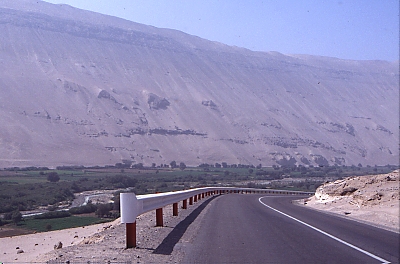
The river Lluta carves a beautiful valley out of the Atacama dessert. The bottom of the valley is lush and green, but go just a few metres up and there is nothing but dry sand. |
|
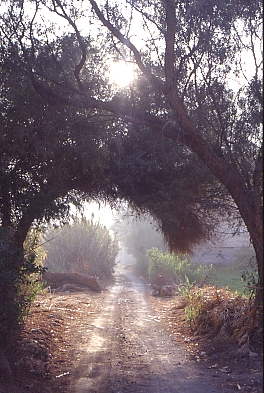
When the main road left the Lluta valley, I continued to follow the river upstream, along small tracks through bushes and farmland. |
|
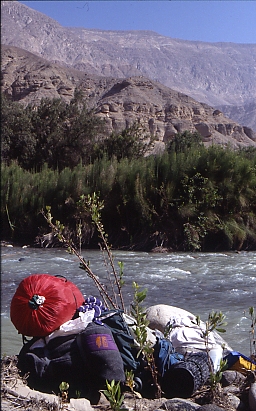
The trail crossed the swift and icy river several times, sometimes by tree-trunk but usually by just plunging into the river and re-emerging at the other side of it. To help maintain my balance I used a bamboo stick which I had found in the fields and which would become my dearest companion. |
|
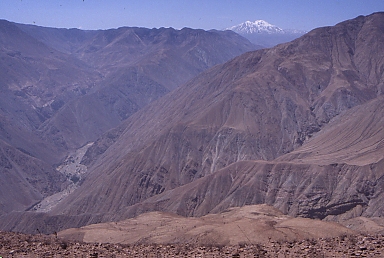
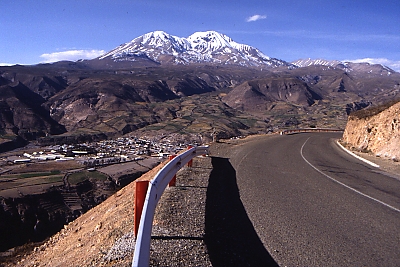
Eventually, beyond the last farmstead in the valley, the trail ascended the steep slopes, leaving the Lluta river deep down below. The snowcapped peak of Nevado de Putre (5815m) is visible in the distance. |
|
I joined the main road again, which I had left behind a few days before, to arrive at the town of Putre. At 3500m and in front of the Nevado de Putre, the largest settlement within hundreds of kilometres is situated just below the edge of the altiplano. |
|
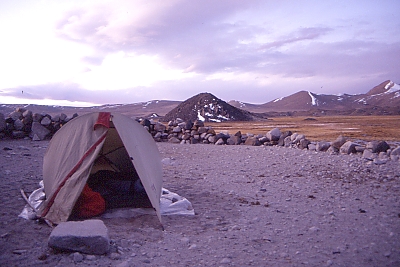
My first night on the altiplano... |
|
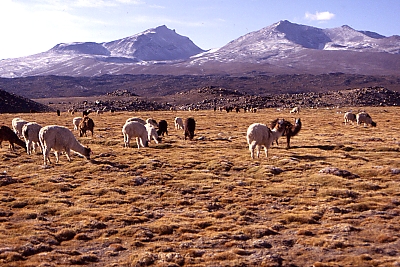
... and my first morning on the altiplano. Llamas having breakfast in the bog, whilst I keep on walking in the hope that my boots defreeze. |
|
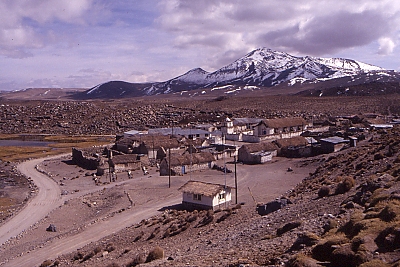
The village of Parinacota (4500m), slightly on the touristy side but still difficult to find anyone selling groceries. |
|
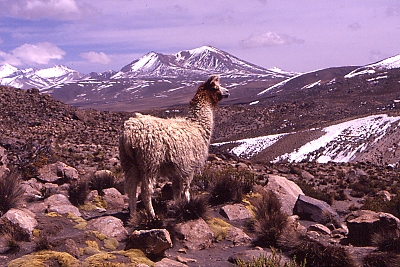
A llama. This is her territory, so be careful! |
|
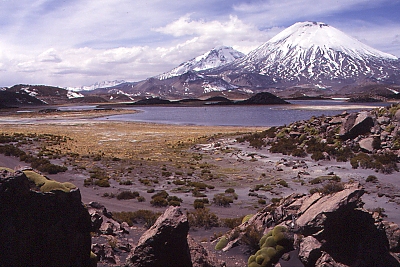
Volcan Parinacota (6342m), with the lagunas of Cotacotani in the front. |
|
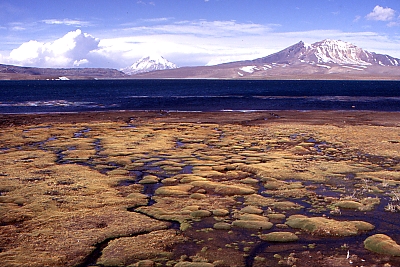
Lago Chungara, at an altitude of 4600m, looking East towards the border with Bolivia. Volcan Sajama (6542m) is visible in the distance. |
|
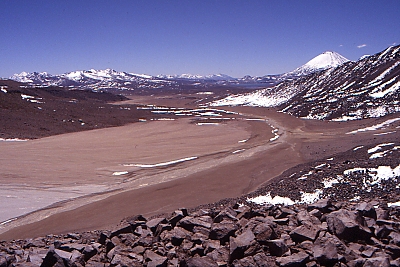
Just before crossing the Nevados de Quimsachata, looking back North towards Lago Chungara and Volcan Parinacota, with Volcan Guallatiri (6063m) "hissing" in my back. |
|
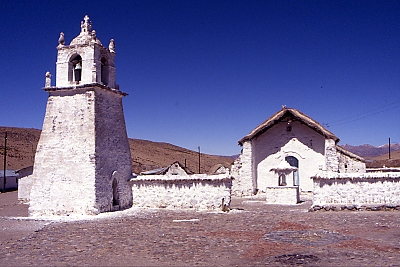
A typical church in the village of Guallatiri, very peaceful. |
|
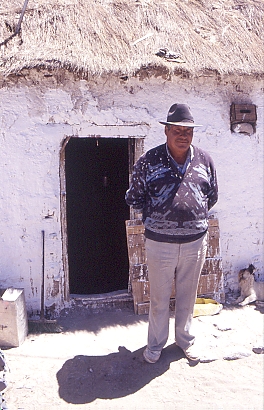
The proud shopkeeper in front of his shop - which is also his kitchen and the entrance to the rest of his house. |
|
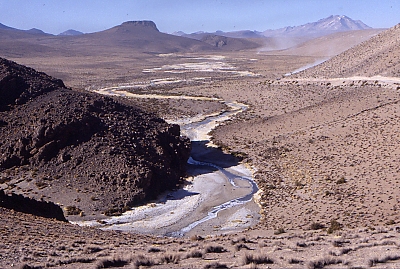
The altiplano is far from "plano", and either boggy or sandy. The few trucks that venture here can be seen a long time ahead as clouds of dust. |
|
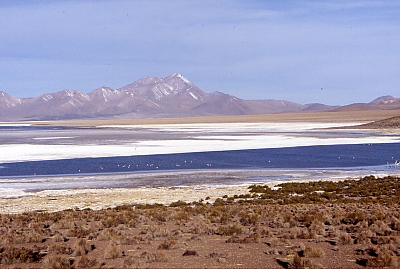
Salar de Surire: the white stuff is salt, not ice. Flamingoes dot the water. |
|
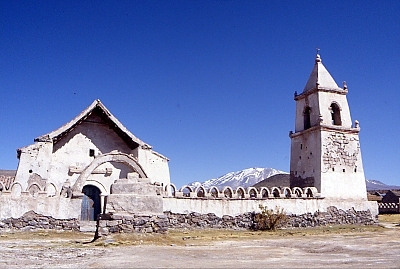
Another typical church, in the Parque Nacional Volcan Isluga. |
|
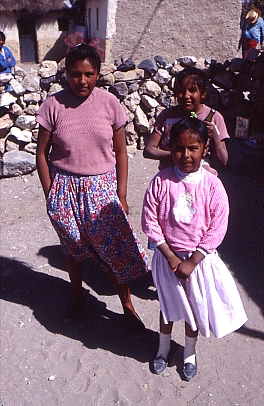
After having "escaped" from an overhospitable mob at their celebration of the Chilean Independence Day, the next morning I passed through the peaceful border village of Colchane. These sisters had a very good idea and gave me a tiny tin with the cream of all creams to save my lips from disintegrating. |
|
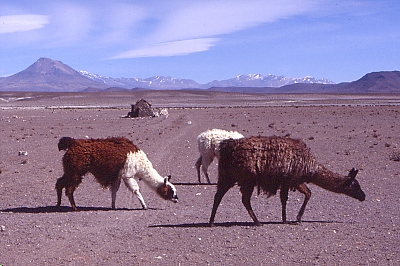
Just outside the village, these llamas were struggling against the wind. |
|
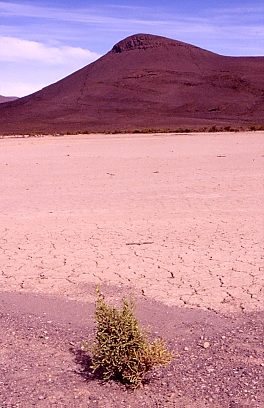
A thirsty bush... |
|
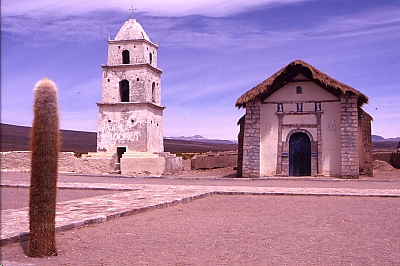
Church in Cariquima. |
|
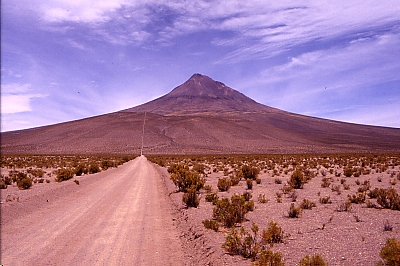
Proof that the Romans were here: straight roads over hills. The "main" road sharply bends left and rounds Cerro Cariquima (5390m), though, rather than to ascend it. |
|
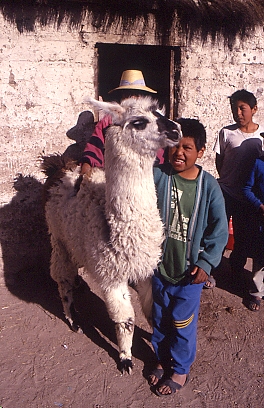
A llama as a pet? This family insisted on making me breakfast, after I had slept in their local school building (shed). I still blame the egg for my misery the next day on the Portezuelo Picavilque - although it might as well have been the only time in my life that I suffered from altitude sickness. |
|
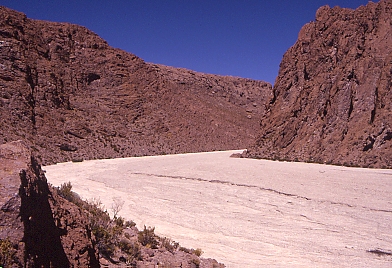
Quebrada Soracagua. A river of sand and salt, with the water actually running underneath and emerging to the surface at places. |
|
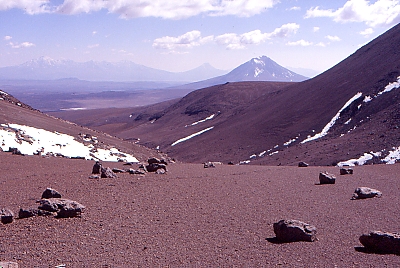
Looking back North from Portezuelo Picavilque (5200m), between the Cerros de Quimsachata - not to be confused with the Nevados de Quimsachata (5785m) - to the West and Cerro Alto Toroni (5982m) at the border with Bolivia to the East. Cerro Cariquima is visible on the right and Cerro Cabarray (5869m) lies 70km away in the distance, just across the border in Bolivia. |
|
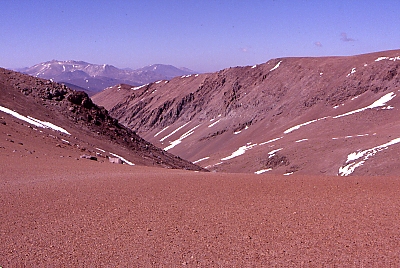
And looking ahead... |
|
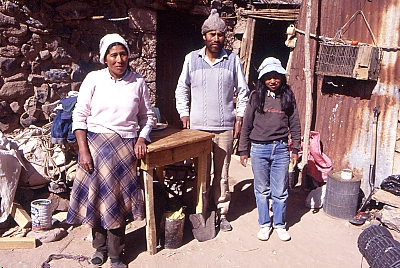
These very friendly and cheerful people were living a simple life in a small farm with little birds far away from the nearest village. After I had taken this picture, the man went into the house only to come out again with in his hand: a camera! He took a picture of me - who by then must have looked like a caveman, much to their bemusement. |
|
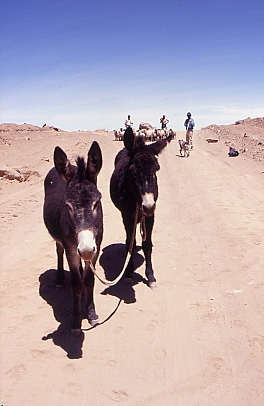
These are not llamas. |
|
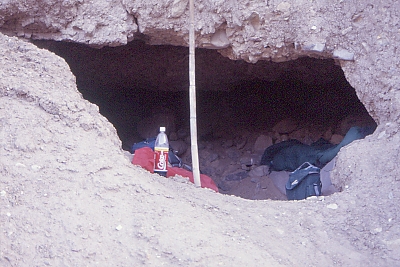
Cavemen sleep in caves... |